
Rhinoplasty recovery comes with a lot of very specific questions. When can I blow my nose? How am I supposed to sleep? What happens if I sneeze? Can I wear my glasses? When does the splint come off? And perhaps the question almost every rhinoplasty patient asks at some point: When will my nose actually look like my nose again?
While your postoperative instructions from your surgeon should always be your primary guide, knowing what to expect can make the healing process feel considerably less uncertain. At his Beverly Hills practice, board-certified plastic surgeon Dr. Gerald Minniti provides detailed postoperative guidance based on each patient’s procedure and individual healing.
This rhinoplasty aftercare guide answers some of the practical questions that commonly arise during the days, weeks, and months following nose surgery.
The First Week After Rhinoplasty: The “Stuffiness” Phase
The first week is generally the most restrictive part of rhinoplasty recovery. Swelling is expected both outside and inside the nose, which means your nose may feel congested or blocked even though you don’t actually have a cold. Depending on your procedure, internal swelling, dried blood, and postoperative dressings or splints can all contribute to the sensation.
Bruising and visible swelling are also generally most noticeable during the first one to two weeks. Patients typically wear a nasal splint for approximately one week and that splints and sutures are generally removed around day seven.
During this early phase, focus on protecting your nose and allowing your body to heal.
Sleep with your head elevated, avoid bending or straining, and follow your individualized instructions regarding medications, nasal care, bathing, and incision care.
Remember: feeling stuffy during the first week is normal. Internal swelling is part of the healing process.
Caring for Your Rhinoplasty Cast or Splint
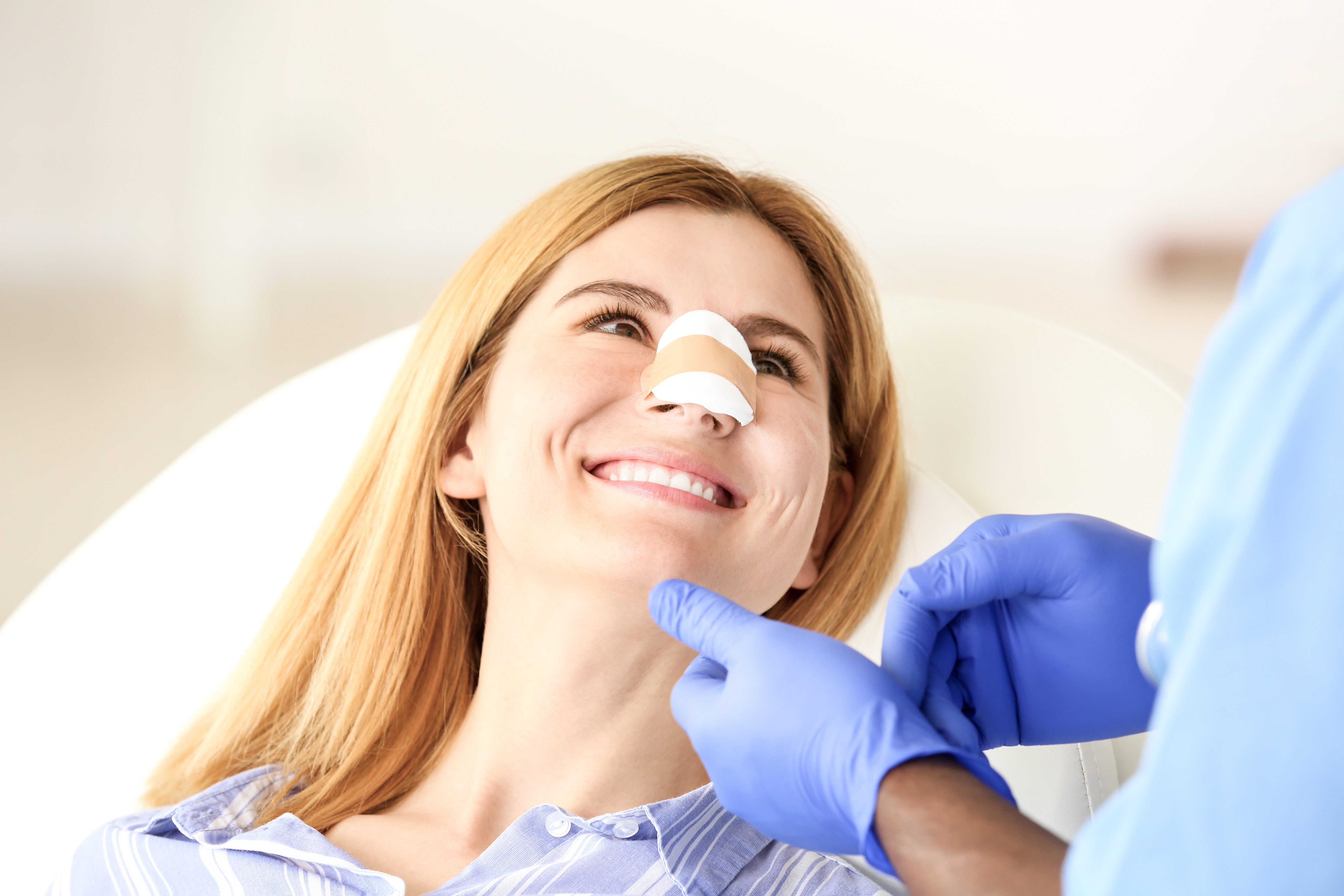
An external nasal splint helps protect and support the nose during the initial healing period.
Dr. Minniti generally removes the nasal splint at approximately one week. Depending on your procedure and healing, tape may then be reapplied for another week to help stabilize the nose and control swelling.
Until your splint is removed:
- Do not remove or reposition it yourself
- Avoid placing pressure on the nose
- Follow Dr. Minniti’s instructions for keeping the area clean and protected
- Be careful when washing your face and hair
- Avoid skincare products that could irritate healing incisions
- Contact the office if the splint becomes significantly displaced or you have concerns about your healing
Seeing your nose for the first time after the splint comes off can be exciting—but don’t judge your final result at that appointment, as your nose will still be swollen.
The Rhinoplasty “Do Not” List: Common Aftercare Questions
Some of the most important rhinoplasty recovery instructions involve things you temporarily shouldn’t do.
Can I Blow My Nose After Rhinoplasty?
You should avoid blowing your nose during the initial healing period until Dr. Minniti clears you to do so. Blowing creates pressure inside the nose at a time when delicate tissues are swollen and healing. The specific amount of time you need to wait can depend on what was performed during your rhinoplasty, so follow the postoperative instructions provided for your procedure.
What If I Have to Sneeze After Rhinoplasty?
Sneezing happens—you aren’t expected to somehow prevent it for weeks. If you need to sneeze during your early recovery, sneeze through your mouth rather than trying to suppress the sneeze or force pressure through your nose. If allergies routinely cause frequent sneezing or nasal irritation, discuss this with Dr. Minniti so you know how to manage your symptoms safely during recovery.
Can I Wear Glasses After Rhinoplasty?
This is an especially important question for patients who normally wear prescription glasses or sunglasses. Eyewear can place pressure directly across the healing nasal bridge. Dr. Minniti advises avoiding eyewear that creates heavier or tighter pressure on the bridge during rhinoplasty recovery.
How long you need to avoid direct pressure depends on the surgical work performed and your healing. Dr. Minniti can tell you when glasses may safely rest on your nose again and whether an alternative method of supporting them is appropriate during recovery.
Can I Sleep on My Side After Rhinoplasty?
During early rhinoplasty recovery, sleeping on your back with your head elevated 15-20 degrees to help minimize swelling and the protect the healing nose from unwanted pressure. Even habitual sleepers should resist rolling onto their face or side until cleared. Pillows or a wedge can help maintain a comfortable elevated position.
When Can I Exercise After Rhinoplasty?
Walking and gentle movement are very different from returning to strenuous exercise.
Activities that significantly increase heart rate and blood pressure can increase swelling or bleeding during early healing. Dr. Minniti recommends avoiding strenuous exercise such as cardio and weightlifting during the initial recovery period and returning to higher-intensity activity only after surgical clearance.
Strenuous exercise is generally resumed within approximately three to six weeks, depending on the patient and procedure. Contact sports require particular caution because even after you feel physically recovered, the healing nose remains vulnerable to trauma.
Can I Bend Over After Rhinoplasty?
Avoid repeated bending, heavy lifting, and physical straining during early recovery.
These activities can increase pressure and contribute to swelling or bleeding. If you need to pick something up, try bending at the knees rather than lowering your head significantly below your heart.
When Can I Wear Makeup After Rhinoplasty?
Makeup should not be applied over healing incisions or areas where it could interfere with postoperative care. Once Dr. Minniti has cleared you and the appropriate areas have healed, makeup can help camouflage residual bruising or discoloration as you return to normal social activities. Be especially gentle when applying and removing products around the nose.
When Can I Wash My Face Normally?
During the initial healing period, facial cleansing needs to work around your splint, tape, and any healing incisions. Use a gentle approach and avoid scrubbing or applying pressure to the nose and use only non-abrasive skincare while the tissues are sensitive.
Once your splint and dressings have been removed and your incisions have progressed appropriately, your skincare routine can gradually return to normal according to your postoperative instructions.
When Will I Look Presentable After Rhinoplasty?
This is different from asking when the nose is completely healed. Most patients experience noticeable swelling and bruising during the first one to two weeks. Many patients return to work or school within approximately 7–10 days, although individual recovery varies.
By weeks two through four, much of the initial postoperative swelling is beginning to subside and patients can gradually resume more of their normal activities. But being socially presentable and seeing your final rhinoplasty result are two very different milestones.
Why Is It So Important to Avoid Nicotine After Rhinoplasty?
Avoiding smoking and nicotine is important after any surgery because nicotine constricts blood vessels and reduces blood flow to healing tissues. After rhinoplasty, this is particularly important because the delicate skin and soft tissues of the nose need a healthy blood supply as they heal around the newly shaped nasal framework.
Smoking and other nicotine products can interfere with wound healing and increase the risk of complications. This includes not only cigarettes, but also vaping and other nicotine-containing products. Follow Dr. Minniti’s instructions regarding how long to avoid nicotine before and after rhinoplasty. If you currently smoke, vape, or use nicotine in another form, be open about it during your consultation so your surgical plan and recovery can be managed as safely as possible.
Long-Term Rhinoplasty Swelling: The “Patience” Phase
This is the part of rhinoplasty recovery that can surprise patients. Your cast is gone. The bruising has faded. You’re back at work. You feel normal. And your nose is still healing.
Rhinoplasty swelling resolves gradually because the skin and soft tissues need time to settle around the newly shaped nasal framework.
During the first several weeks, changes can happen relatively quickly. After that, refinement becomes more subtle. Residual swelling continues to diminish through the first several months and that the final result may continue developing for up to approximately 12 months. This does not mean your nose will look dramatically swollen for a year. It means subtle swelling can remain after the obvious signs of surgery have disappeared.
Why Does the Tip of My Nose Stay Swollen So Long?
The nasal tip can be one of the slower areas to refine following rhinoplasty.
It is common for the tip to temporarily appear fuller, firmer, or less defined than expected while swelling resolves and the tissues settle.
Skin thickness, the amount of surgical work performed, whether the procedure was primary or revision rhinoplasty, and individual healing can all influence how quickly definition emerges.
This is one reason comparing your appearance at three weeks with someone’s one-year rhinoplasty result can be misleading. Your early result is not your final result.
Why Does My Nose Look Different From One Day to the Next?
Minor fluctuations in swelling can occur during rhinoplasty recovery. You may notice that your nose looks more swollen at certain times of day or after particular activities. Healing tissues do not necessarily progress in a perfectly straight line from “swollen” to “finished.”
As long as recovery is progressing normally, these small fluctuations generally become less noticeable as healing advances. If you notice a sudden or significant change, however, contact Dr. Minniti rather than assuming it is routine swelling.
Protecting Your Nose While It Heals
Once you begin feeling normal again, it can be easy to forget that the nose is still healing internally.
Continue protecting your result by:
- Avoiding accidental pressure or trauma to the nose
- Waiting for clearance before returning to strenuous exercise
- Avoiding contact sports until approved
- Protecting healing skin from excessive sun exposure
- Avoiding smoking and nicotine as directed
- Following instructions regarding glasses and sunglasses
- Keeping scheduled postoperative appointments
When Should I Call Dr. Minniti During Rhinoplasty Recovery?
Postoperative appointments allow Dr. Minniti to monitor your progress, but you should not wait for your next scheduled visit if something about your recovery concerns you.
Contact the office if you experience symptoms that are unexpected, severe, rapidly worsening, or inconsistent with the postoperative instructions you received.
That may include concerns such as:
- Significant or persistent bleeding
- Severe or increasing pain
- A sudden increase in swelling
- Signs of infection
- Trauma or accidental impact to the nose
- A splint or dressing that becomes significantly displaced
- New or concerning breathing difficulties
- Any symptom that simply feels substantially different from what you were told to expect
Your individual postoperative instructions should always take precedence over general recovery information online. When in doubt, call. Part of postoperative care is making sure questions and concerns are addressed while you heal.
Have More Questions About Rhinoplasty Recovery?
The best time to understand rhinoplasty recovery is before surgery, not when you’re at home staring suspiciously at your nasal splint. During your consultation, Dr. Minniti will discuss the procedure, expected recovery, and postoperative care based on your individual surgical plan.
If you are considering rhinoplasty (nasal) plastic surgery in Beverly Hills or Los Angeles contact Dr. Gerald Minniti’s office to schedule a rhinoplasty consultation and learn what you can expect before, during, and after your procedure.